
Overcoming Barriers to Offshore Green Hydrogen Production
12/17/20252 min read
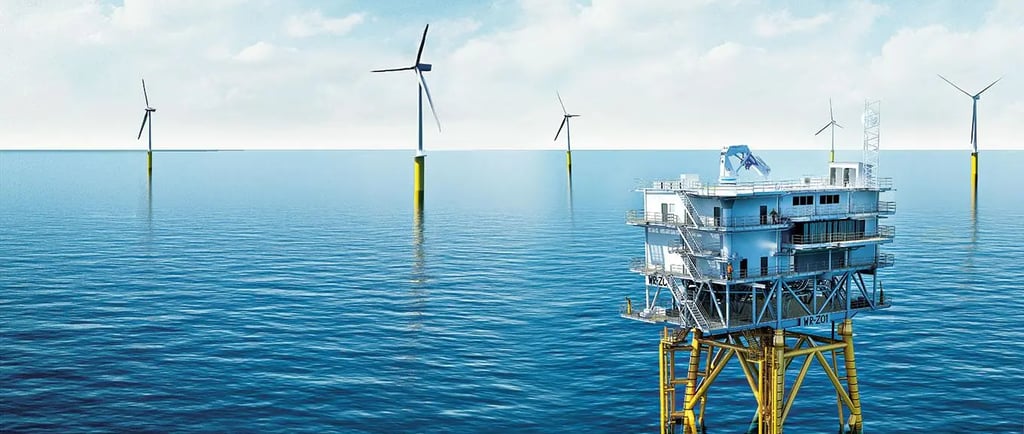
Offshore green hydrogen production, which combines electrolyzers with wind farms to create zero-carbon fuel at sea, has a lot of exciting potential for cutting down carbon emissions in heavy industries, shipping, and remote energy transport. Projects like EDF's HYODE pilot off Dunkirk show that we're making strides by looking into floating platforms, seawater electrolysis, and offloading hydrogen from ships in exclusive economic zones.[1] However, we’re still in the early stages of this technology, and there are some pretty big hurdles that limit how scalable and commercially viable it can be.
The biggest challenge is financial: right now, the cost of hydrogen (LCOH) from offshore sources is between 4.0–7.0 USD/kg, which is way higher than onshore options because of the huge investments needed for marine-grade infrastructure, dealing with tough environments, and high operations and maintenance (O&M) expenses.[2][3] This includes issues like rapid corrosion, biofouling, and bad weather, which can shorten the lifespan of equipment and increase risks.[4] Transportation costs are also a factor, whether through pipelines (which require checks to stop hydrogen leaks) or using vessels for compressed/l liquefied hydrogen.
On the technical side, making sure electrolyzers can last in offshore conditions is a big bottleneck; systems need to handle changing pressures, corrosion from seawater, and fluctuating wind power—sometimes without desalination.[2][5] Seawater electrolysis also brings its own risks, like competing chlorine evolution and precipitate formation, which can affect performance and require expensive advanced catalysts.[5] Platform scalability—especially for floating ones—still isn’t clear, given the limited space, weight limits, and tricky energy management issues.
Regulatory and environmental issues add to the delays: complicated permissions in marine areas, lack of standardized safety rules for hydrogen, and local ecological impacts (like waste heat changing water layers or noise bothering marine life) need thorough assessments.[1][4] The absence of technical standards and undeveloped business models also makes investors hesitant.
To sum it up, unless we see significant cost cuts through scaling, innovative materials, and smart policy changes, offshore green hydrogen might just end up being a niche tech project well into the 2030s, potentially missing its chance to seriously contribute to cutting carbon emissions.
[1] Hydrogen Fuel News - EDF’s HYODE Project Pioneers Offshore Hydrogen Production off Dunkirk [2] Modern Power Systems - H2 production at sea: vast opportunities, big challenges [3] ScienceDirect - Offshore wind-to-green hydrogen: a comprehensive review on current challenges [4] Ramboll - The rise of offshore hydrogen production at scale [5] ScienceDirect - Green hydrogen production in offshore environments: A comprehensive review
Photo: Ramboll.
Contact
Reach out to George for expert energy advice
Phone
+39 331 802 9277
+1 281 932 6226
© 2016. All rights reserved.